
How Vedic astrology timing works
Vedic astrology was built to answer "when?", and it does it with two systems working at different scales: Vimshottari dasha cycles that map your life into planetary chapters, and muhurta windows that pick favourable moments within them. Here is how the two fit together.
Western astrology mostly answers "what am I like?". Jyotish puts timing at the centre, not at the edge: the Vimshottari dasha system divides a 120-year cycle into planetary periods that describe the running theme of each stretch of your life, while muhurta — electional astrology — selects the specific days and hours that favour beginning something within that theme.
Vedara turns both systems into a tool you can actually use. It works out your current dasha and sub-period, finds favourable windows for what you have in mind, and gives you a daily read on whether conditions support action. All of it comes from your own chart.
Side by side
Vedara vs Typical astrology app
| Timing capability | Vedara | Typical astrology app |
|---|---|---|
| Vimshottari dasha periods | ✓Current mahadasha and sub-periods | ✕Usually absent |
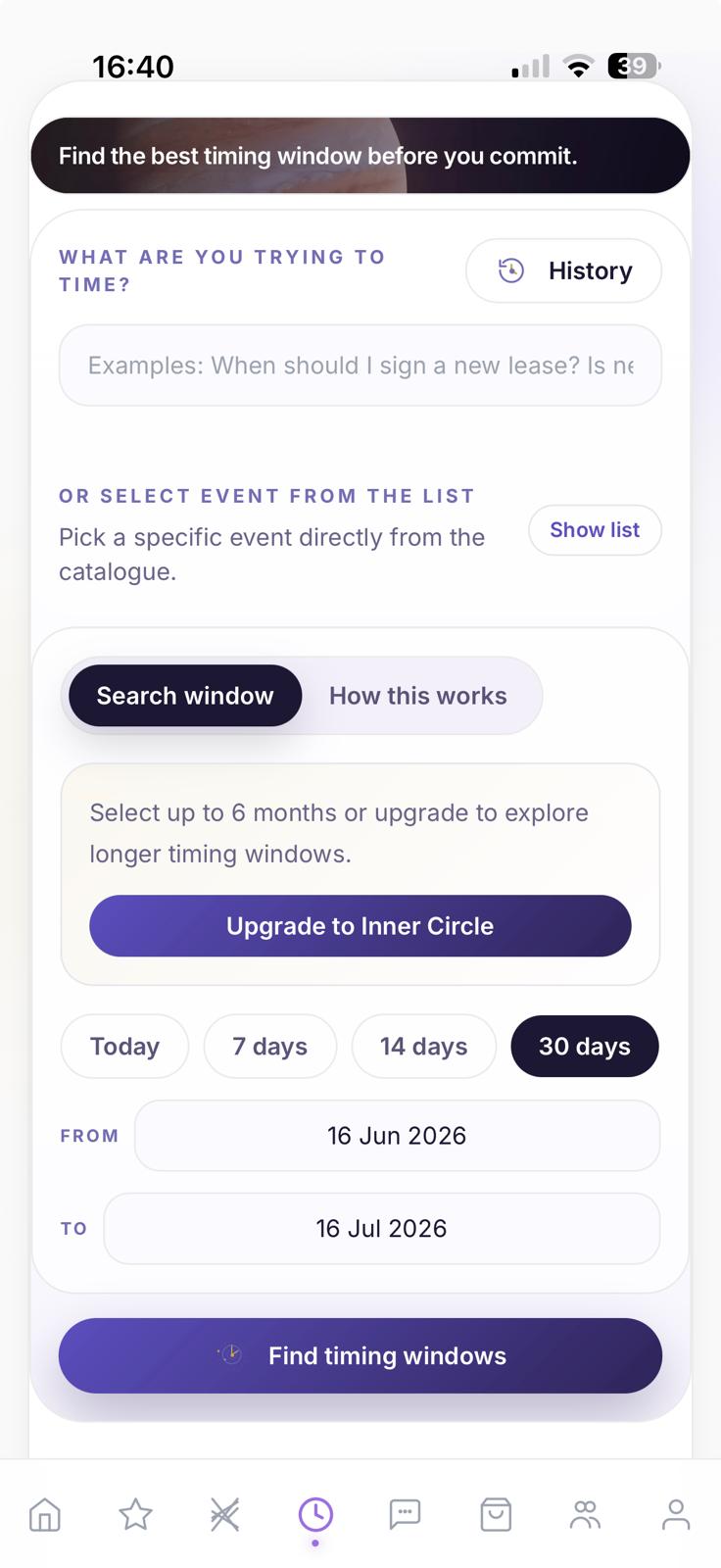
| Muhurta window search | ✓Find a good time before you commit | ✕Rare |
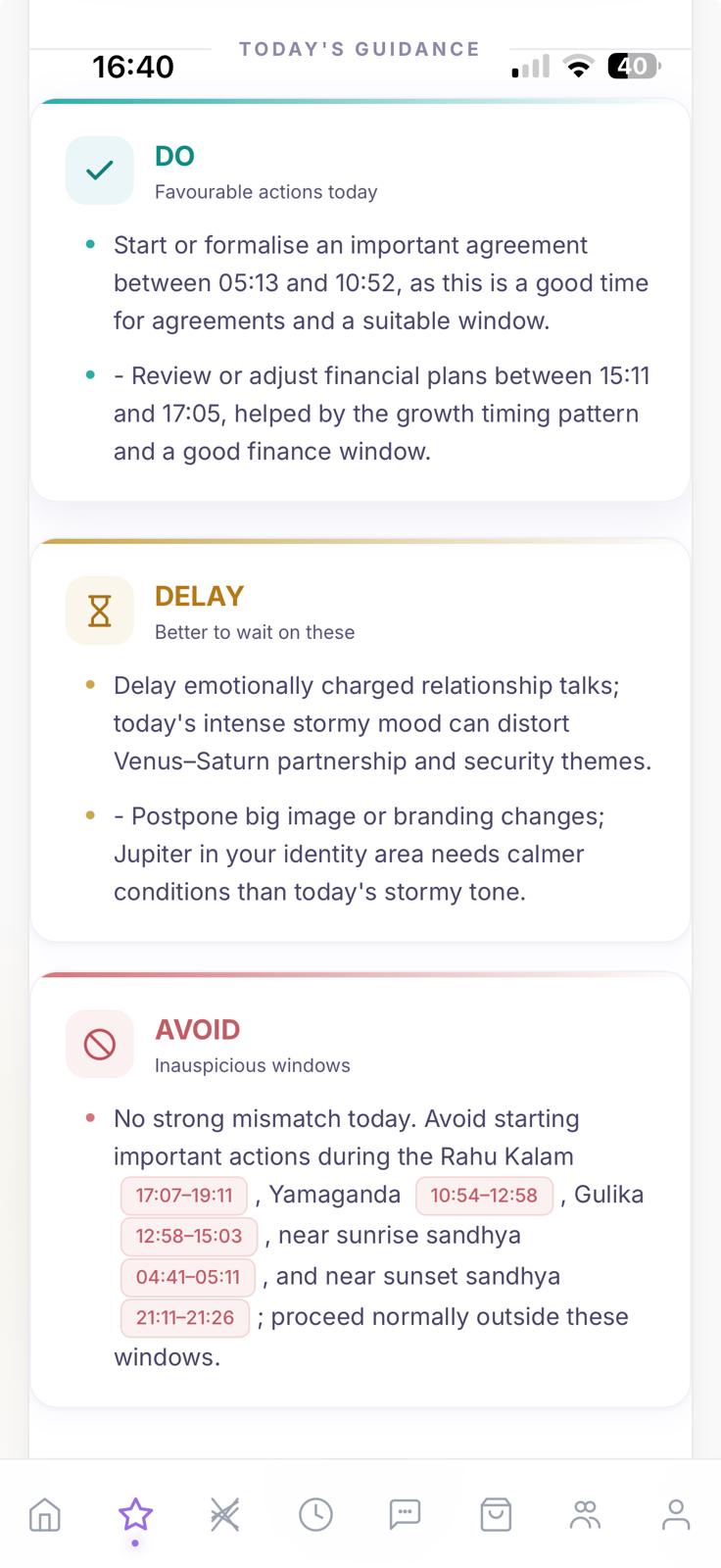
| Windows to avoid | ✓Flags Rahu Kalam, Yamaganda, Gulika | ✕Rare |
| Daily "act or wait" read | ✓Do, delay or avoid, daily | ~Generic horoscope |
| Personalised to your chart | ✓Yes, not a universal daily | ~Often one-size-fits-all |
Inside the app
What you actually get
Swipe to see more →
Dasha tells you the chapter. Muhurta tells you the moment.
Your dasha period is the broad weather: the multi-year theme a planet brings to this stretch of your life. Muhurta is the fine detail, the specific hours that favour starting an agreement, a journey or a launch. Put them together and you can line up important decisions with supportive conditions instead of guessing.
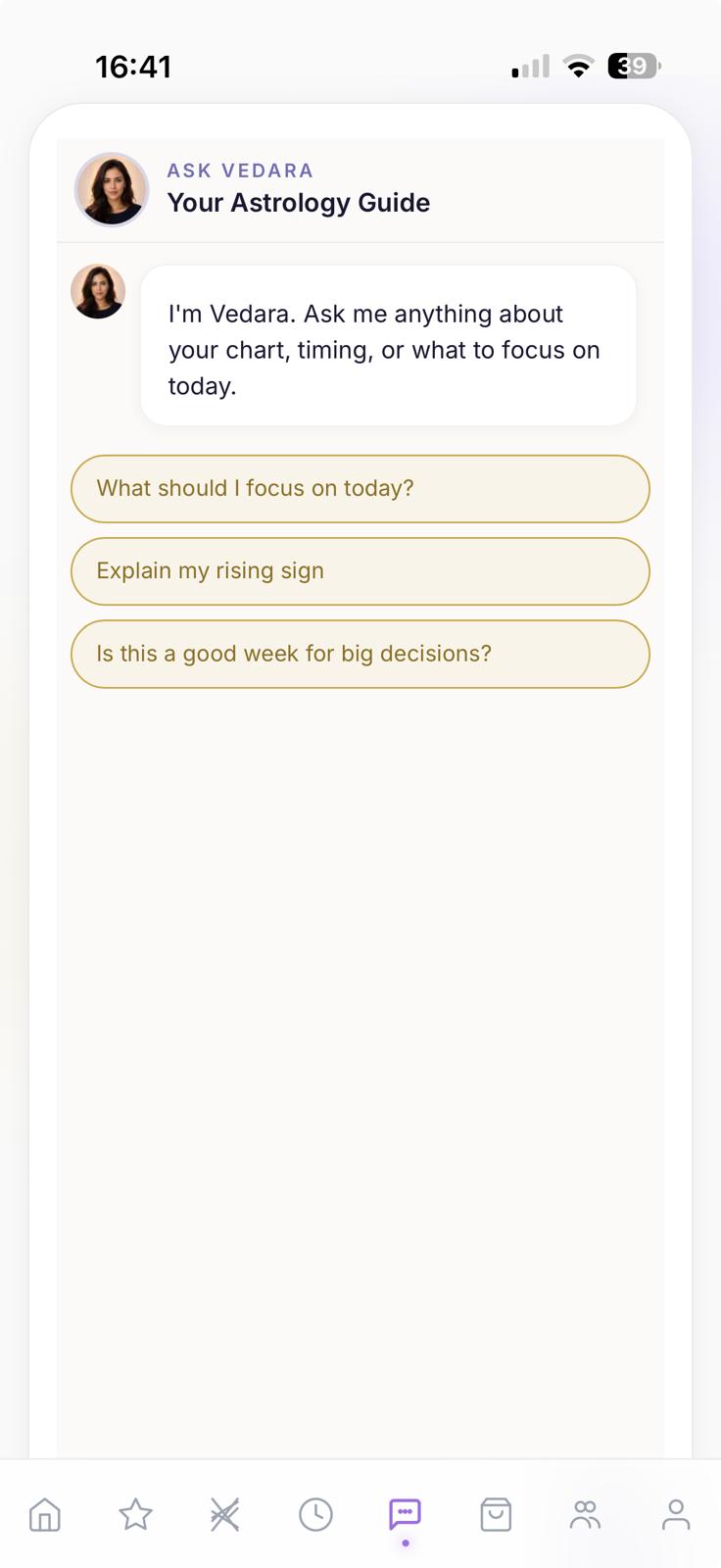
Vedara connects the two for you. When you ask whether to do something, it weighs your dasha context against the windows available, then gives a recommendation and shows the reasoning. The "when" is never a black box.
Find your window
Search months ahead for a favourable muhurta window for a specific plan.
Know your chapter
See which dasha and sub-period you are in, and what it tends to bring forward.
Avoid the rough hours
Daily guidance flags the windows tradition treats as inauspicious, so you can route around them.
Questions people ask
What is the Vimshottari dasha system?+
It is the main Vedic timing system. A 120-year cycle is split into planetary periods (mahadashas) with nested sub-periods, calculated from the Moon’s nakshatra at your birth. It tells you when different themes switch on in a life.
How is muhurta timing different from a daily horoscope?+
A horoscope is a forecast written for a sign. Muhurta is electional astrology: you actively choose a good time to start something, based on the conditions of specific moments and how they sit with your chart.
Can it tell me the best time to do something specific?+
Yes. You describe what you want to time, such as a signing, a launch or a difficult conversation, and Vedara searches for favourable windows and shows which ones to avoid.
Is the timing the same for everyone?+
No. Some factors, like the day’s planetary positions, are shared. But Vedara weighs them against your own chart and dasha, so the recommendation is personal to you.
Keep reading
Find your next good window
See your current dasha and search for an auspicious muhurta window for what you are planning. Free to start.
Find timing windows→